


Many industrial equipment manufacturers, automotive component suppliers, and mechanical assembly factories keep facing repeated headaches when purchasing customized die casting components. Low dimensional accuracy, easy surface cracking, insufficient structural strength, frequent corrosion damage, and shortened service life all lead to increased maintenance costs, delayed production schedules, and hidden safety risks in finished equipment. Most buyers only focus on unit prices and appearance specifications, ignoring core material performance, casting process standards, and post-processing quality, which creates invisible hidden troubles that only appear after long-term operation.
Precision aluminum alloy die castings solve most common on-site faults by adopting high-purity aluminum alloy formulas, integrated high-pressure die casting molding, and strict multi-stage dimensional inspection. Unlike ordinary die castings with loose internal pores, these customized parts achieve dense internal structure, stable mechanical properties, and excellent matching precision with assembly fixtures. They adapt to complex working environments including high vibration, frequent impact, outdoor humidity, and mild chemical erosion, greatly reducing replacement frequency and overall operating cost for downstream enterprises.
A large number of engineering users overlook deep-seated quality problems behind die casting products. Internal porosity causes air leakage and oil leakage in hydraulic and pneumatic parts. Ununiform wall thickness leads to thermal deformation under continuous high-temperature operation. Unqualified surface treatment results in rapid oxidation and rust in humid workshops. Poor tight-fitting tolerance causes abnormal noise, wear acceleration, and premature scrapping of matching accessories. These problems cannot be detected by simple visual inspection, and often cause serious losses after mass installation and operation.
Professional die casting enterprise adopts fully automated intelligent production lines to control every detail from raw material melting, mold filling cooling, pressure maintaining shaping to deburring, polishing and anti-corrosion anodizing. Each batch of aluminum die casting parts undergoes pressure resistance testing, hardness testing, size tolerance detection, and salt spray corrosion resistance verification. The whole production process complies with international industrial standards, ensuring consistent batch quality without obvious performance differences between individual products.
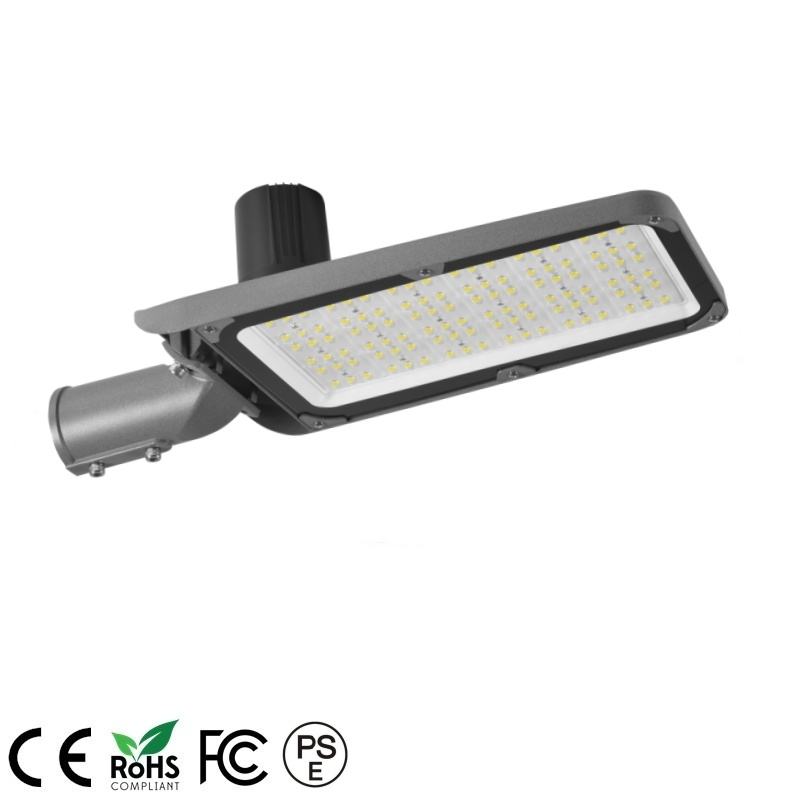
Different application scenarios put completely different requirements on aluminum die casting performance. Automotive chassis accessories need high shock resistance and fatigue durability. Communication housing parts demand lightweight structure and high electromagnetic shielding stability. Hardware mechanical parts require ultra-high dimensional precision and wear resistance. Pipeline connection parts must maintain airtightness and water tightness under long-term pressure changes. Blindly selecting universal die castings cannot match actual working conditions, and directly reduces overall equipment reliability and operation cycle.
Performance Comparison Table of Ordinary Die Castings & Premium Precision Aluminum Die Castings
| Performance Index | Ordinary Low-Cost Die Castings | High-Precision Aluminum Alloy Die Castings |
|---|---|---|
| Internal Structure Density | Loose pores, easy cracking | High density, no hidden pore defects |
| Surface Corrosion Resistance | Poor, easy oxidation and discoloration | Excellent, long-term anti-rust and anti-erosion |
| Dimensional Tolerance Range | Large deviation, poor assembly matching | High precision, seamless assembly cooperation |
| High Temperature Deformation | Obvious deformation under continuous heating | Stable shape, low thermal deformation rate |
| Impact & Fatigue Resistance | Low, easy fracture after repeated vibration | Strong, adapt to frequent impact working conditions |
| Service Life Cycle | Short, frequent replacement required | Long stable service, low later maintenance cost |
Long-term practical application experience proves that cheap die casting products seem cost-effective at the beginning, but bring continuous extra expenses including frequent part replacement, equipment shutdown maintenance, assembly debugging labor cost, and after-sales quality disputes. High-standard customized aluminum alloy die castings reduce comprehensive comprehensive cost throughout the whole service cycle, and stabilize the quality grade of final finished machinery and equipment.
Strict mold design and customized molding also support irregular special-shaped aluminum parts, complex cavity structures, thin-wall precision structures and multi-hole integrated components. Enterprises do not need secondary processing and drilling modification after receiving goods, which shortens production assembly cycles and avoids precision damage caused by manual secondary processing. Stable batch supply capacity also meets mass mass production orders, urgent delivery demand and long-term stable supporting procurement plans.
For industrial purchasers, judging qualified aluminum die casting parts cannot rely solely on parameter descriptions. Actual salt spray test duration, pressure resistance load data, fatigue cycle times and on-site use feedback are the real reference standards. Standardized production, complete quality inspection reports and customized parameter adjustment ability are the core advantages that distinguish reliable die casting suppliers from irregular small workshops. Choosing mature, stable and high-performance aluminum alloy die casting components fundamentally avoids engineering quality risks and improves the overall competitiveness of finished products in the market.